
Areas of Interest:
- Intensive silviculture management
- Vegetation management effects on planted forests
- Environmental sustainability of intensive forest management
- Ecophysiology of managed forest stands.
- Process-based modeling
Current Programs:
VMRC (Vegetation Management Research Cooperative)

Research areas: Vegetation management effects on planted forests productivity and dynamics; ecophysiological interactions between competing vegetaion and planted stand.
The mission of VMRC is: Conduct applied reforestation research of young plantations from seedling establishment through crown closure with an emphasis on operational vegetation management. Promote reforestation success such that survival, wood-crop biomass and growth are maximized while protecting public resources.
Examples of study sites and results from VMRC studies:

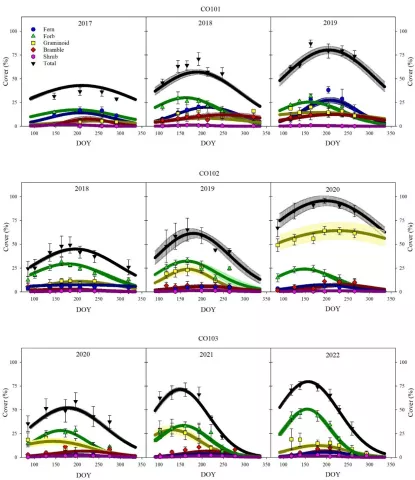
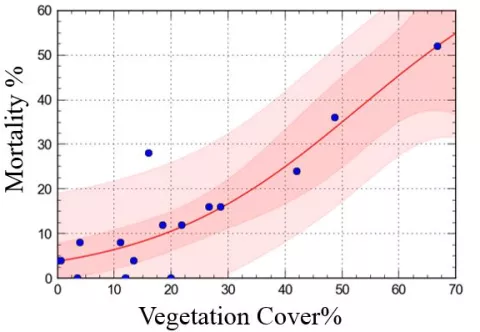

New VMRC projects:
- GEnESIS (Genetic, Environmet and Early-Silviculture Interactions Study) (ongoing)
The main objective is to investigate the influence of GxE, GxS, and GxExS interactions on the performance of 50 genotypes from control pollinated families of Douglas-fir. The environmental treatments will consist of field sites covering a wide range of climatic and soil conditions while the silviculture treatments will consist of different forest vegetation management treatments. The relationship between seedling physiology and field performance of genotypes under different environmental and silvicultural scenarios will also be assessed. The specific objectives of this study are to: i) investigate GxE, GxS, and GxExS interactions for Douglas-fir genotypes, ii) examine interactions between vulnerability to cavitation, field drought stress, and seedling native hydraulic conductivity (degree of cavitation), and iii) evaluate if vulnerability to cavitation is a useful tool for evaluating genotype field performance under different environmental conditions.
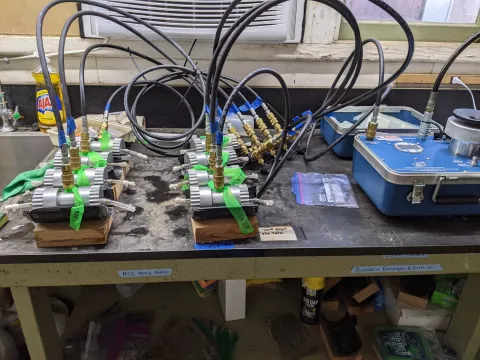
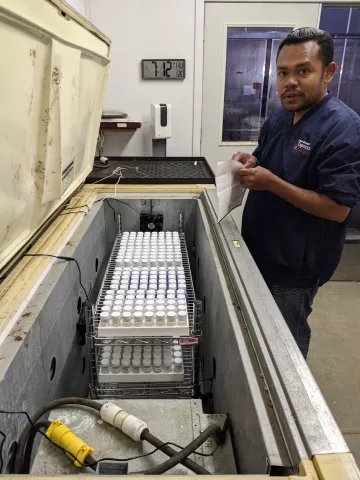
GEnESIS Phase 1: Morphological and Physiological assessments of the 50 full-sib families in order to select the genotypes to be tested in the field.
Physiological assessments:
- Stomatal conductance sensitivity to VPD
- Xylem hydraulic conductivity and vulnerability to cavitation
- Frost hardening
- Heat tolerance
- Photosynthesis



GEnESIS Phase 1.5: Common garden study testing the families assessed in Phase 1 under contrasting treatments of drought stress.
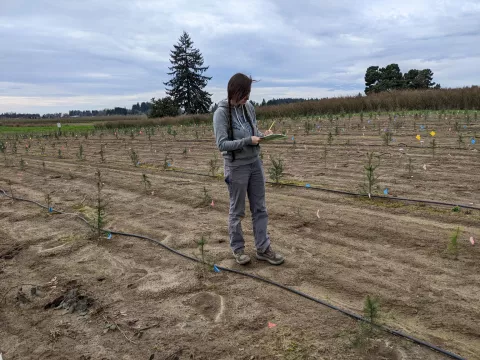
GEnESIS Phase 2: Field installations of different genotypes growing under different levels of establishment silviculture in 4 sites.
Field installation starts in Fall 2026.
- CoSInE (Competition and Site Interactions Experiment) (ongoing)
The main objective is to develop a decision support system with focus on how site conditions and chemical vegetation management treatments interact to effect seedling survival and growth in PNW. The study utilize a 2 x 2 x 2 factorial design, where factor 1 corresponds to fall site preparation, factor 2 corresponds to spring release during growing season 1, and factor 3 corresponds to spring release during growing season 2.
The project aims to better understand the effects of vegetation management treatments on the soil and plant water relations of conifer plantations in the Pacific North West by analyzing conifer seedling and competing vegetation interactions during the first two years after planting. The study will include periodic assessments of biomass growth, water use and nutrient content of seedling and competing vegetation. Additional plant water potential and gas exchange will be carried out as well.


- Reforestation After Fire (ongoing)
The primary goal of this research project is to determine how pre-wildfire stand age/structure and VM history interacts with post-fire vegetation community dynamics, herbicide efficacy, and Douglas-fir seedlings performance growing under varying microsite conditions. The specific objective are:
- Determine the effect of pre-wildfire stand age/structure and VM history, on post-fire early-seral vegetation community dynamics and Douglas-fir seedling establishment.
- Determine the effect of standing trees in post-fire non-merchantable stands on vegetation community dynamics and Douglas-fir seedling establishment.
- Analyze the effect of microsite selection (azimuth and distance from old stumps) on Douglas-fir seedling establishment.
- Determine the interactive effect of forest vegetation management and i) pre-wildfire stand structure/age and ii) microsite selection on Douglas-fir seedling establishment
- Compare vegetation community dynamics in unburned and burned areas
- Assess the impact of wildfire on the efficacy of vegetation management treatments
- Long-term Effects of Vegetation Management on Biomass Stock and Net Primary Productivity of Four Coniferous Species in the PNW (finished)
The main objective of this study is to evaluate the long-term effects of vegetation management treatments on the ANPP (Mg ha-1 year-1) and whole-ecosystem biomass stock (Mg ha-1) of four coniferous species growing under contrasting vegetation management treatments.
Measurements include: Stand inventory; monthly litterfall; overstory, midstory and understory biomass; forest floor and coarse woody debris biomass; soil organic matter and fine roots biomass.


- Long-term Effects of Vegetation Management on Nutrient Stock of Four Coniferous Species (finished)

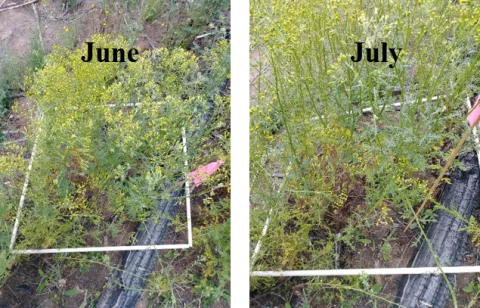
- Water Use of Competing Vegetation: Senecio vulgaris (finished)
With CAFS (Center for Research on Sustainable Forests):
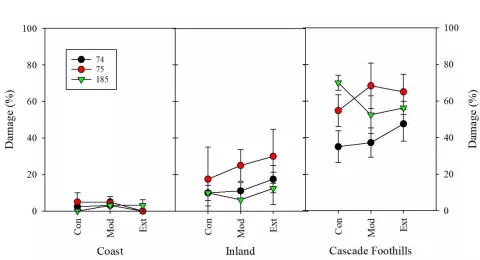
- Effect of hardening drought conditioning, sed source and site on seedling and planting window after chemical site preparation using Oust on Seedling Quality and Root Growth (with U. Idaho and Purdue University)
Objective: To examine seedling physiology and root system architecture in response to nursery-induced drought conditioning intensity and subsequent drought.
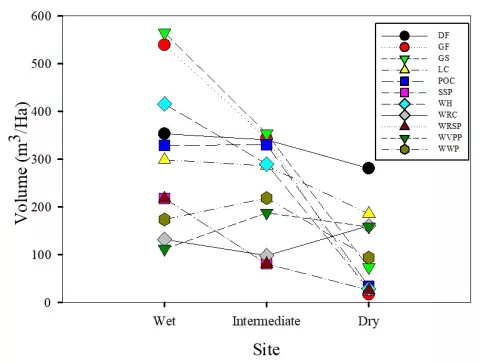
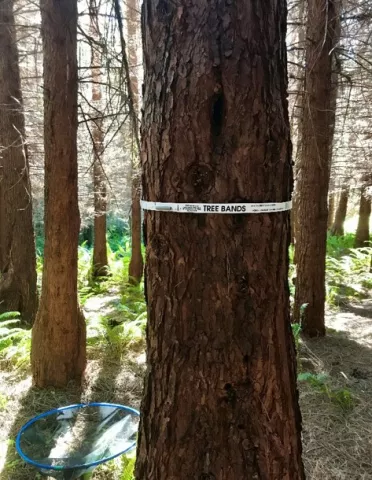
- Variation in productivity, wood quality and soil carbon of 11conifer species across a gradient in water deficit
Other Projects:
- Forest Vegetation Management Strategies for Reforestation in Washington State: Alternative to Herbicides (with WA-DNR)
The goal of this project is to evaluate the efficacy, costs, and operational feasibility of different herbicide and non-herbicide vegetation management strategies for successful reforestation.
The specific objectives are:
- Compare the effectiveness of alternative treatments of vegetation management on controlling competing vegetation,
- determine the impact of different vegetation management treatments on the diversity and abundance of competing vegetation,
- determine the effect of removing glyphosate from the herbicide tank mix,
- determine the impact of different vegetation management treatments on Douglas-fir seedling height growth, diameter growth, survival, and biomass,
- determine the impact of different vegetation management treatments on soil moisture availability, and
- conduct an economic analysis on the costs and benefits of each vegetation management strategy.
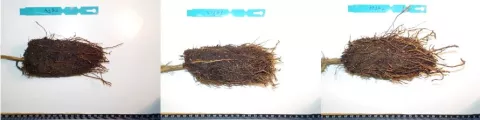
- Effect of hardening severity and planting window after chemical site preparation using Oust on Seedling Quality and Root Growth

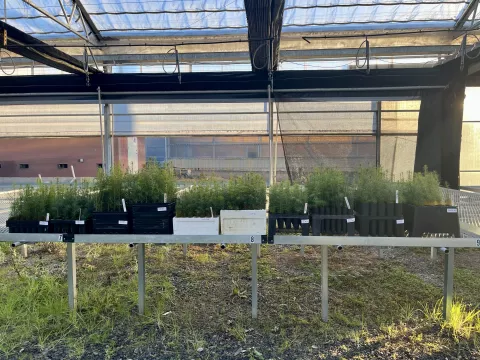
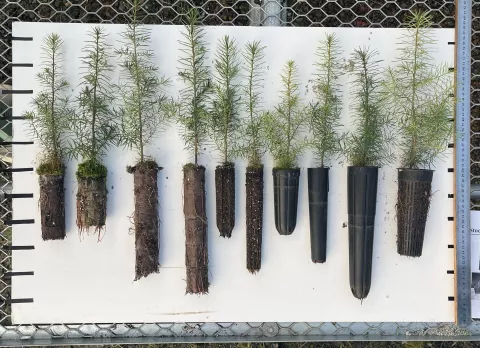
- Alternative container for seedling production
- Long-term effects of competing vegetation control on soil moisture dynamics


- Process Based Modelling
I am actively working on process based modeling. I parameterized and validated the 3-PG model for Pinus elliottii and Pinus taeda stands.
Currently I am working on parameterizing and validating the model for Pinus radiata, Pinus palustris, Eucalyptus nitens, Eucalyptus globulus, Sequoia sempervirens and Pseudotsuga menziesii.


PINEMAP (finished)
I worked on modelling and silviculture & ecophysiology research areas.
- Estimating of NPP dynamics on a large dataset that included more than 4000 permanent prots across the southeastern U.S.
- Development of a new version of the ecophysiological model 3-PG.

Managing Longleaf Pine Forests for a Sustainable Future (finished)
In collaboration with the Auburn University, University of Florida and the U.S. Forest Service, this project is developing forest carbon models that can simulate the “typical” longleaf pine restoration sequencethat. The models can be used to evaluate forest management techniques in southeastern U.S. longleaf pine forests.
- Developed the first growth and yield model for lanted longleaf pine forests.
- Developed models to analyze the impacts of prescribed burning on groundcover biomass.
- Develop a suite of individual-tree functions to estimate height, volume and biomass.

Integrated Model for Growth, Yield and In Situ Biomass for Planted Southern Pines (finished)
In collaboration with the University of Florida and the Florida Forest Service, this project will develop an integrated forest biomass model that will allow the user to simulate stand dynamics of planted loblolly, longleaf and slash pine forests under different management scenarios. The model allows simulating the following:
- Growth and Yield (Survival; Dominant Height; Basal Area; Total Merchantable Volume outside and inside bark; Merchantable Volume inside bark partitioning in 3 wood products: sawtimber, chip-and-saw and pulpwood).
- In Situ Biomass stock (aboveground, coarse roots, forest floor, coarse woody debris, standing dead and understory biomass).